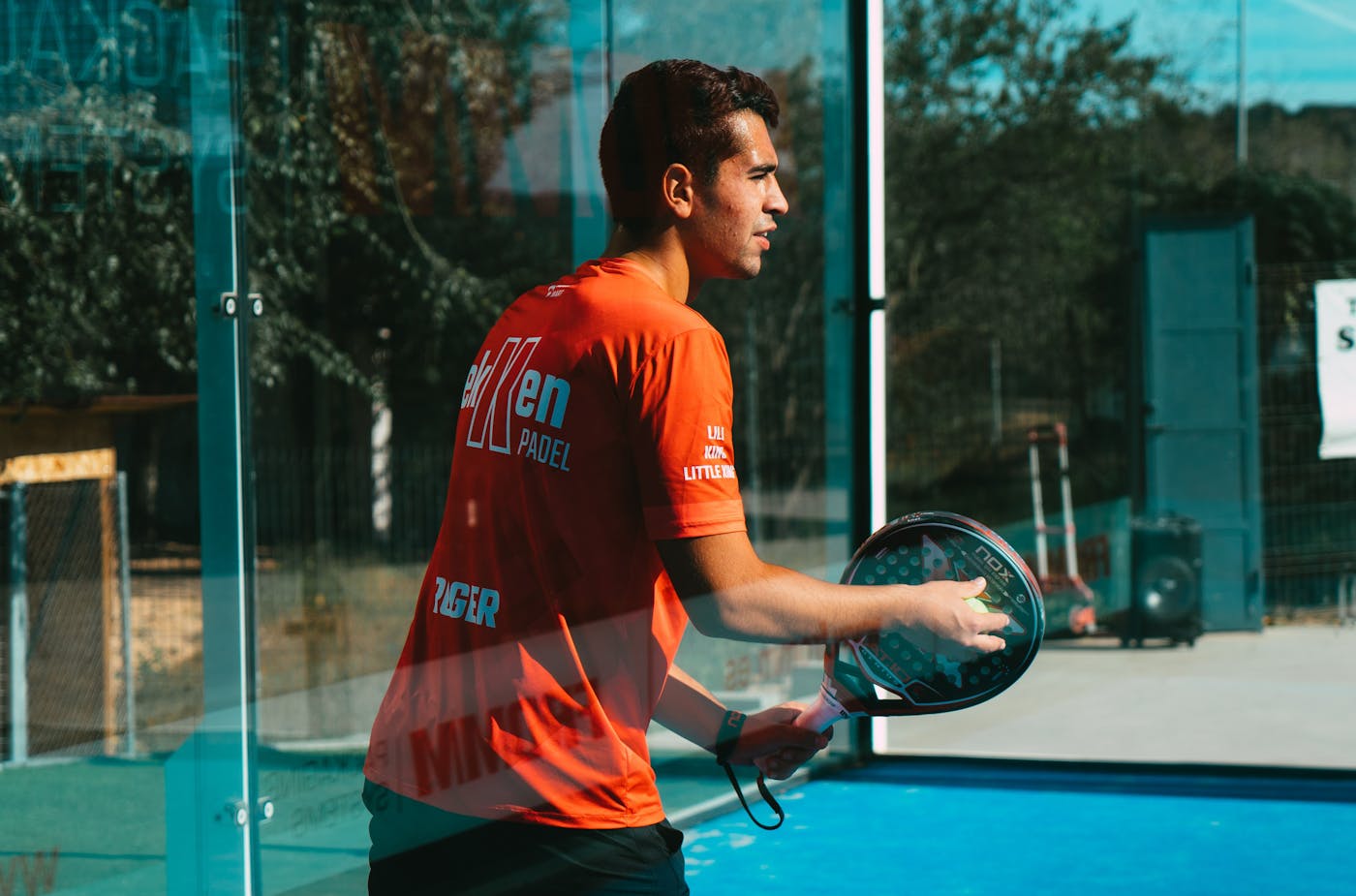
A double-glass ball bounces once on your side, then rebounds from both the side and back glass before you play it. To practise it, learn one wall order at a time, call which wall the ball reaches first, then add a controlled return and a live-point finish. Keep enough space to move around the ball. Under the FIP Rules of Padel, you must return it before it bounces on the floor a second time.
This guide is for players who can manage a single back-glass rebound but lose their bearings in the corner. If you are still learning that first read, start with our beginner’s guide to using the back glass, then return to this progression.
What makes the double glass difficult?
The ball can touch the back glass first or the side glass first. Those orders create different flights out of the corner, and the speed and angle of the incoming shot change the rebound again. A memorised route can fail when the feed changes.
The useful early cue is which wall the ball reaches first, but keep watching the ball after that contact. LTA Padel’s beginner guidance and its dedicated double-glass tutorial recommend giving yourself room, preparing early, reading the ball’s pace and choosing control over power for glass play. The Padel School’s corner-defence guide also recommends starting by anticipating the first wall. The drill below turns those cues into a progression; it does not assume one wall order always calls for one fixed swing.
How to practise the double glass step by step
Use a partner or coach on the other side of the net to feed a ball into one back corner. Agree on the feed before you start. If the ball misses the intended wall order, reset it rather than asking the defender to rescue a poor feed. Keep the pace controlled enough to read, but return every live feed before its second floor bounce.
| Stage | Feed and task | What to look for |
|---|---|---|
| 1. Read the route | Feed the same corner and wall order repeatedly. The defender says “back first” or “side first” as soon as they can tell, then lets the ball finish so there is no pressure to hit it. | Did the player track the ball through the first contact instead of guessing from the feed? |
| 2. Add the return | Keep the wall order predictable. The defender turns early, makes small adjustments around the ball’s path and returns it with a compact, controlled swing. | Was there room to swing, and did contact stay in front rather than beside or behind the body? |
| 3. Change the order | Feed both orders to the same corner without announcing which one is coming. The defender calls the first wall and plays the ball before its second floor bounce. | Did the player update their feet after the first wall instead of continuing along the wrong route? |
| 4. Play the next ball | Put the feeding pair at the net and the defending pair at the back. Feed either corner, then continue the rally after the double-glass return. | Did the defenders recover together, or did the hitter leave a gap while watching their shot? |
Run each of the first three stages in one corner before switching so the player practises both forehand and backhand contacts. Work in short blocks and slow the feed again if the player starts rushing. These blocks are a convenient way to organise a session, not a proven number of repetitions needed to master the shot.
The four checks to use after each feed
Keep the review simple. Give one tick for each item the player managed on that repetition:
- Read: called or recognised the first wall before making the return.
- Space: moved around the ball and left room between the body, racket and glass.
- Contact: stayed balanced enough to make a controlled return in front of the body.
- Recovery: moved back into the pair’s defensive shape after the shot.
Do not add the ticks into a performance score. They are prompts for choosing the next practice step. If the read is late, go back to Stage 1. If the player sees the route but gets crowded, widen the feed or slow it. If the return works but the pair remains split, keep the feed and practise the recovery together. The padel positioning basics guide explains how the partners can adjust as a pair.
Common double-glass mistakes
Running straight into the corner
Moving directly backwards can leave the ball behind you and the racket trapped close to the wall. Turn early, keep the ball in view and use small steps to create a contact space. LTA Padel’s back-glass guide also stresses spacing, early preparation and reading the incoming pace.
Choosing the shot before reading the rebound
Do not decide that a double-glass ball must be attacked or must be played off the back wall. First see which way it leaves the corner and whether you can contact it in balance. If the rebound gives you a high, comfortable ball, the bajada guide covers the separate attack-or-reset decision. If it stays awkward, send back a safer ball and regain your shape.
Practising only the easy wall order
Players often repeat the route they already recognise. That can make a drill feel smooth without preparing them for the other order. Spend time on each order separately before mixing them, and ask the feeder to keep the two feeds distinct while the player is learning.
How to review a double-glass practice clip
Record a short sequence from a safe, permitted position where the ball, both walls and the player’s feet stay visible. Review a few feeds and write down the wall order, whether the player created space, the quality of contact and how the pair recovered. A wide view helps with the route and recovery; a closer side view can help with contact position. Our guide to recording padel video for analysis covers camera placement.
With Padel Coach App, you can keep a clip of the same repeated feed and focus the next session on one visible issue, such as getting crowded after the first wall. The useful outcome is a specific practice cue, not a claim that one successful return proves the pattern is fixed.
Double-glass questions answered
Which wall should the ball hit first?
There is no order you need to force during a point. Train back-first and side-first feeds separately, then mix them so you learn to read the actual flight.
Can the ball hit both walls before I return it?
Yes. After the ball bounces on your side, it can rebound from the permitted walls and remain in play. You still need to return it before its second bounce on the court surface. See the current FIP Rules of Padel for the official rule wording.
Is this the same as hitting my own wall to return the ball?
No. This drill covers receiving a ball after it rebounds from the side and back glass. Returning a ball off your own wall is a different shot and decision.
Sources and coaching basis
- LTA Padel: Padel tips for beginners, including its double-glass tutorial and glass-play cues.
- LTA Padel: How to play off the back glass, for spacing, preparation, reading pace and a partner-fed glass drill.
- The Padel School: Defending the corner, which recommends beginning with the read of which wall the ball hits first.
- FIP Rules of Padel, for the second-bounce rule.
Learn how our guides are researched, prepared and checked in our editorial policy.