
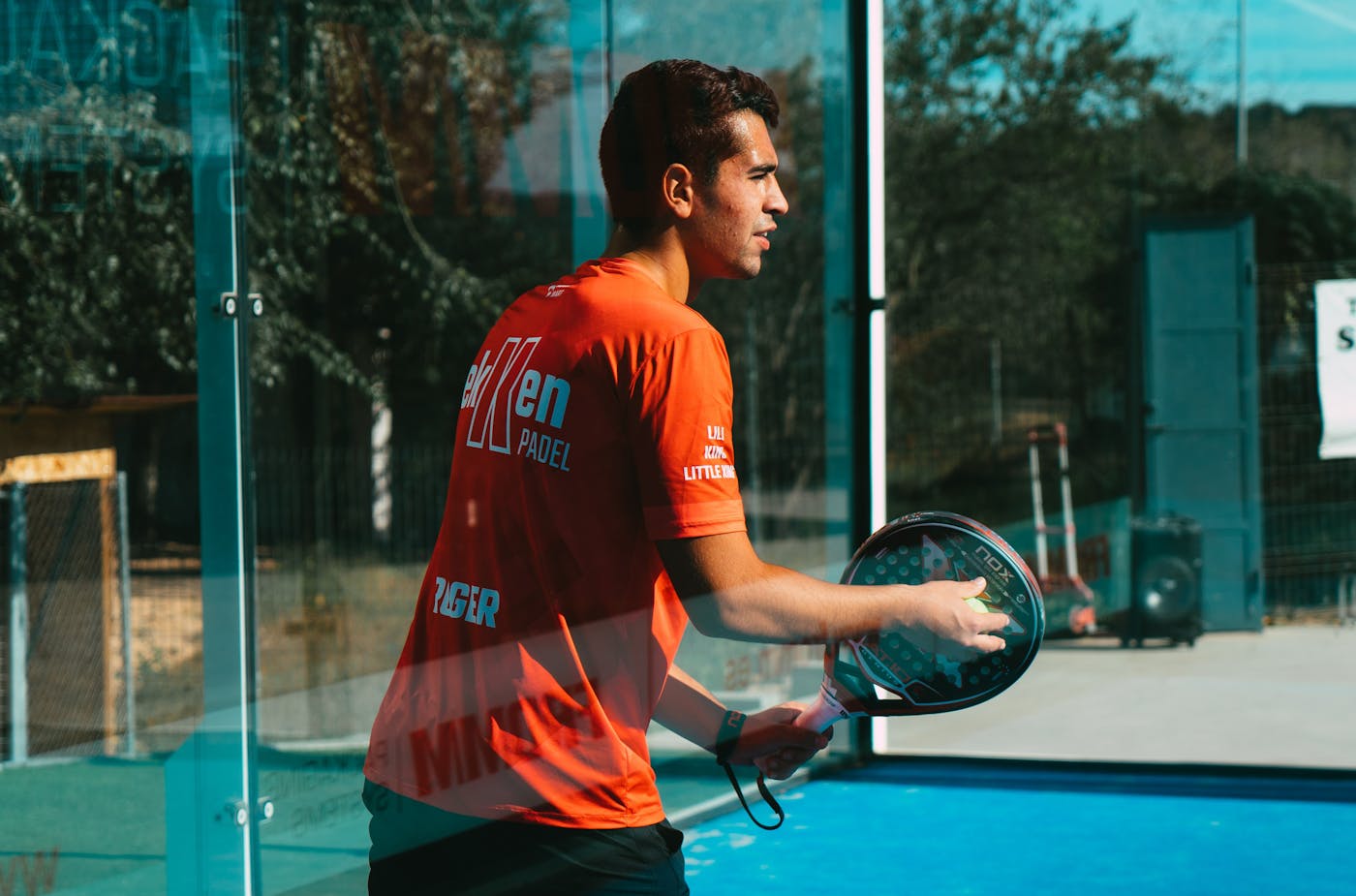
A useful padel warm-up moves from easy movement to the shots and decisions you will use in the match. If you have around 12 minutes, begin with light movement, add controlled changes of direction, rally at a comfortable pace, then practise a few padel-specific situations with your partner. Finish by agreeing one simple cue for the opening games.
This is for recreational and improving players who want a repeatable routine before a match. LTA Padel recommends warming up for 10–15 minutes and describes physical, racket and mental preparation. The sequence below adapts those elements into 12 minutes; it is a practical template, not a medical prescription or a guarantee against injury.
A 12-minute padel warm-up
| Time | What to do | Keep the focus on |
|---|---|---|
| 0–2 min | Walk briskly or move easily around the court, changing direction without sprinting. | Gradually increasing movement; no sudden maximal effort. |
| 2–5 min | Use controlled body-weight movements such as shallow squats, side steps and forward or lateral lunges within a comfortable range. | Smooth balance and comfortable range, not depth or speed. |
| 5–8 min | Rally cooperatively from the back of the court. Start with gentle forehands and backhands, aiming for a steady exchange. | Height, spacing and clean contact rather than winners. |
| 8–10 min | Move into a few net volleys and overheads, then swap roles. Keep the feeds predictable and controlled. | Ready position and recovery after each shot. |
| 10–12 min | Each player serves and returns a few balls at match rhythm, then agree one simple opening cue. | Start the first point organised, not rushed. |
You do not need to complete every activity if court time is short or space is shared. Keep the same progression—easy movement first, then the racket—and follow any venue or coach instructions. If your match begins in less than 12 minutes, use the time you have without turning the warm-up into a sprint test.
Why include both movement and racket contact?
Moving around the court prepares you for the short forward, backward and lateral movements in padel. But feeling physically ready does not automatically give you touch or timing. LTA Padel specifically recommends a racket warm-up as well as physical preparation, with cooperative rallies in common situations such as playing from the back, volleying at the net, serving and returning.
Keep the rally cooperative at first. If the ball is flying around, slow it down and make the target easier. A warm-up is for finding rhythm and court awareness; it is not the moment to prove who can hit the hardest.
For a more structured court drill, use the beginner volley control drill during the net portion. If your pair often loses shape when moving forward, review the padel positioning basics and keep the recovery step in mind after each feed.
What should you agree with your partner?
Choose one cue that can be used under pressure. For example:
- “Ready” when both players have recovered into position.
- “Mine” or “yours” for an uncertain middle ball.
- “Hold” if a player needs the partner to keep the current shape rather than rush forward.
Pick the cue that fits your pair. You do not need a long tactical meeting before the first point. If middle balls are a recurring problem, agree a default using the middle-ball decision guide before you start.
How can you adapt the routine?
If you are new to padel, spend more of the racket portion on comfortable forehands and backhands and less time on overheads. If you are experienced, include a few controlled returns and first volleys; the return-and-first-volley drill can help you practise the transition separately during a training session.
Use comfortable ranges of motion. This article does not diagnose pain or prescribe rehabilitation. If an injury or health condition limits your movement, get guidance from an appropriately qualified professional and adapt or skip any exercise that is not suitable for you.
What should you remember after the match?
After playing, note whether the warm-up helped you feel ready for the first few points. You might record that volleys felt controlled but returns felt rushed, or that you and your partner remembered the agreed call. Padel Coach App can help you keep a short session note and review a match clip later to choose a focus for your next practice. See the guide to tracking padel matches for a simple way to turn those observations into a useful next step.
Quick questions
How long should a padel warm-up be?
LTA Padel recommends 10–15 minutes before a padel session. The 12-minute plan here fits inside that range, but the right routine depends on your needs, available court time and any guidance from your coach or clinician.
Should I play points during the warm-up?
You can use a few controlled serves and returns to find match rhythm, but start cooperatively and build the pace gradually. If you play full points, keep them short and avoid turning the warm-up into a competitive set.
What is the most important part of the routine?
Do not skip the racket contact. A general movement warm-up cannot tell you how the ball is bouncing or how your timing feels that day. Begin with an easy rally, then include the shots you expect to use early in the match.
Source
Learn how our guides are researched, prepared and checked in our editorial policy.