
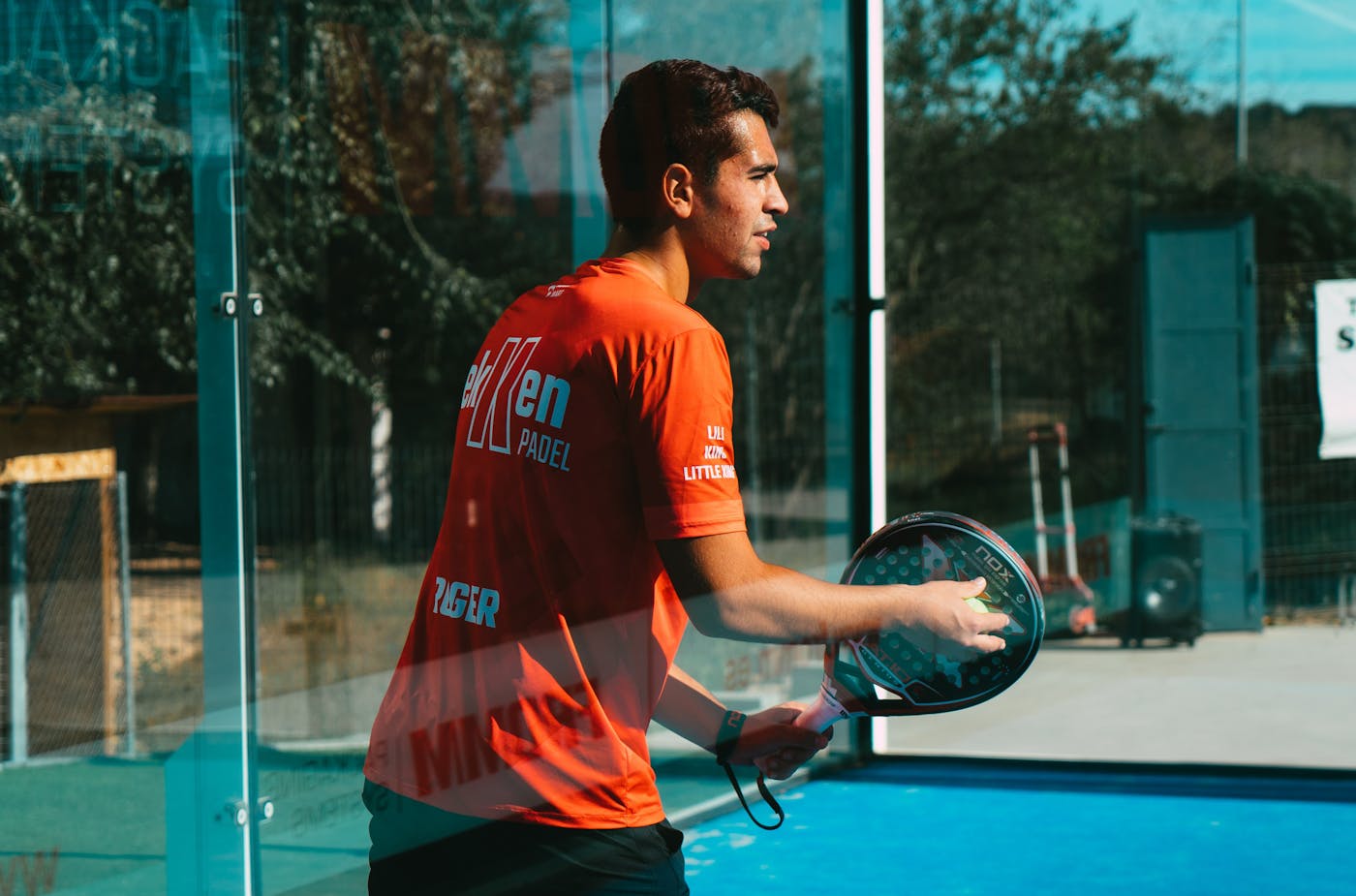
Play a chiquita when your opponents are holding the net, you can control the ball, and there is a useful space around their feet. A chiquita is a soft, placed shot from the back of the court toward the feet of net players. If you have more room to lift the ball over them, a lob may be the better choice; if your contact is rushed, keep the rally alive with a safer return.
This guide is for improving club players who often respond to net pressure with a hard drive or an automatic lob. LTA Padel describes the chiquita as a softly placed ball toward opponents’ feet that can force an upward reply and help your pair move forward. The decision framework below adds a practical check for the ball you receive and your partner’s next movement. It is an editorial coaching aid, not a guarantee that the shot will win the point.
Chiquita, lob, or reset?
Use the table as a quick choice, not a rigid playbook. The ball, opponent positions, and your balance still matter.
| Read the situation | First option | What you are trying to create |
|---|---|---|
| Opponents are at the net, a controlled contact is available, and their feet or the space between them is reachable | Chiquita | Make them lift or play from an awkward contact so your pair may take space |
| Opponents are at the net, and you have time and room to send a high ball over them | Lob | Push them away from the net and give your pair time to improve position |
| The ball is low, fast, or leaves you reaching or off balance | Safe reset | Return a playable ball and reorganise instead of forcing an attack |
The short version is position → contact → pair:
- Position: Are both opponents actually at the net, and can you see a useful target near their feet?
- Contact: Can you guide the ball there without rushing or trying to manufacture pace?
- Pair: If the return goes upward or sits up, are you and your partner ready to move together?
If the first two answers are yes, the chiquita is worth considering. If you can lift with control but the feet are covered, compare it with a deep padel lob. If the contact is poor, choose margin first. LTA Padel’s lob guide explains how a lob can move the net pair back and give you time; its placement-over-power article describes the chiquita’s intended use against opponents at the net.
How can you practise the choice?
Start with cooperative feeds from the net to a player at the back. Agree on a broad target area near the net players’ feet, rather than aiming for a line. The goal is not to hit every ball short; it is to recognise a suitable ball and guide it with enough control to make the next contact less comfortable.
Stage 1: find the touch
Have a partner feed comfortable balls to the back player. The net player stays mostly in place and offers a clear target. The hitter guides the ball softly toward that target, then resets for the next feed. Begin on one side, then repeat on the other so the player can notice how the contact changes.
Stage 2: compare chiquita and lob
Alternate two feeds: one where a low placed ball has a clear route toward the feet, and one where there is time and room to lift over the pair. Before each shot, call chiquita or lob. Let the ball’s landing and the opponents’ reply determine whether the choice was useful—not whether the shot produced an immediate winner.
Stage 3: add the reset option
Mix in an awkward or rushed feed. The player should call reset and play a safer return rather than forcing either attacking option. This prevents the drill from teaching that every ball from the back must be turned into an attack.
Stage 4: play the point out
Start with one pair at the net and one at the back. The back pair chooses a chiquita, lob, or reset from the feed, then continue the rally. Both back players read the reply before moving forward; if the opponents remain balanced and ready, the pair may need to keep defending rather than rush the net.
Use a few repetitions on each side before changing the feed. That is just a manageable session structure, not a validated number of attempts. If the player starts hitting harder to reach the target, slow the feed and return to the touch exercise. The padel training-week guide can help you fit this focused practice into a broader session.
What should you check after the shot?
A chiquita is a way to change the opponents’ contact, not a command for your pair to sprint forward. Look at the reply: did the net player have to lift, could they volley comfortably, and did your team have time to take space together? The point may still continue, so stay ready for the next ball.
For pair movement, see padel positioning basics. LTA Padel’s match-tactics guide also highlights the value of partners sharing information about opponent positions and their intended shot.
Use match video to review the decision
If you record a practice or match clip, ask everyone who appears for permission and follow the venue’s filming rules. Use a wide view that shows the hitter, both net players, and the partner. Review a few comparable points and note:
- where the opponents were when you chose the shot;
- whether your contact looked controlled or rushed;
- where the ball landed relative to the net players;
- whether your pair moved together after seeing the reply.
Padel Coach App can be part of that review loop: use its video feedback as another perspective, then combine it with your own notes about the target and the pair’s movement. Do not treat one clip or an AI suggestion as proof that the shot was right or wrong. Our padel match-recording guide covers safe setup and framing, while reviewing match video with your partner offers a structured way to discuss what the clip actually shows.
Chiquita questions answered
Is a chiquita just a slow shot?
Not quite. The useful idea is placement: LTA Padel describes playing softly toward opponents’ feet when they are at the net. A slow ball without a useful target may simply give them time to attack.
Should my partner move forward as soon as I hit it?
Not automatically. Read the opponents’ contact and move as a pair when the reply gives you time. If they volley comfortably or keep you under pressure, stay organised and defend.
Is a chiquita safer than a lob?
Neither is automatically safer. The better option depends on your contact, the opponents’ position, and the target you can reach with control. Practise both options and keep a reset for awkward balls.
Sources
Learn how our guides are researched, prepared and checked in our editorial policy.