
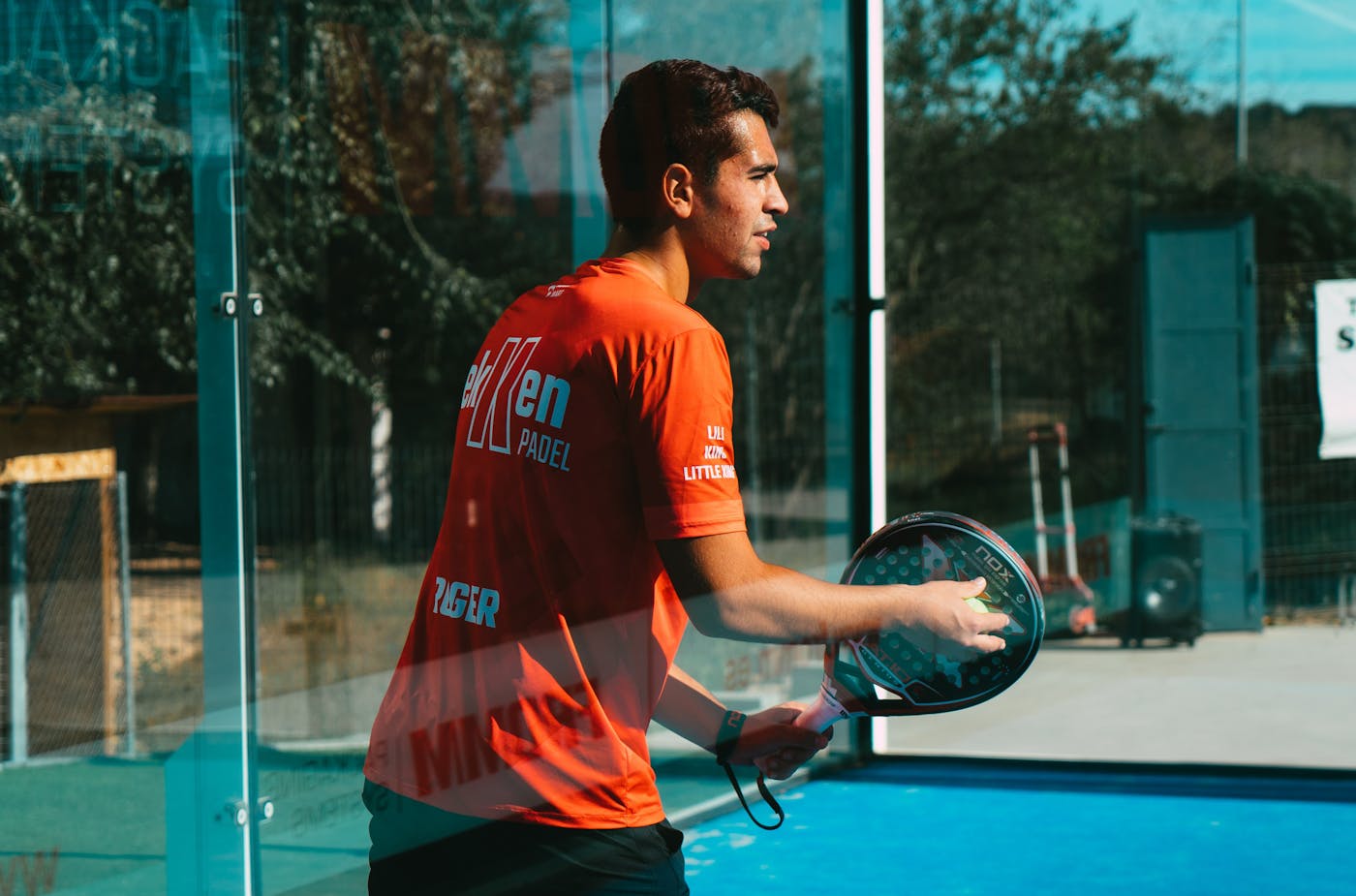
If you coach at a club or run a padel venue, a useful taster should let beginners experience a rally and understand what they could learn next—not try to teach every shot in an hour. This proposed 60-minute format is for one coach and four adult newcomers on one doubles court; adapt it to your participants, facilities and coaching remit.
The outline below is our editorial framework, not an official LTA session plan. LTA Padel’s separate Padel Xpress programme is a six-week course for adult beginners, and its suggested lesson plans are available to accredited coaches through the LTA Coach Hub. Use the relevant qualification and programme guidance when delivering a structured course.
A 60-minute beginner taster, step by step
| Time | Activity | The aim |
|---|---|---|
| 0–5 min | Welcome and orientation | Find out who is new, explain the session, and cover court boundaries and safe movement. |
| 5–17 min | Warm-up and racket familiarity | Prepare to move, then get comfortable tracking and controlling a ball. |
| 17–27 min | Cooperative mini-court rally | Build contact and control before adding pressure or detailed technique. |
| 27–37 min | Serve and return | Let everyone try the underarm serve and experience the start of a point. |
| 37–47 min | One predictable back-glass feed | Introduce the idea of letting a ball bounce and using the back wall. |
| 47–55 min | Short doubles games | Bring serve, rally, walls and partner communication together. |
| 55–60 min | Review and next step | Ask what felt comfortable and offer a clear follow-on session. |
0–5 minutes: welcome before the first feed
Introduce yourself, learn names and ask whether anyone has played before. Set one simple expectation: today is about trying the game, not passing a test. Point out the net, service boxes, glass and doors, and agree where spare balls and rackets will be kept. If anyone has an access need or a concern about taking part, ask privately what would help and make adjustments within your competence and the venue’s facilities.
5–17 minutes: warm up and get used to the ball
Use a gradual, padel-specific warm-up. LTA Padel recommends allowing 10–15 minutes before a padel session; this plan uses 12. Its warm-up guide describes starting with gentle movement, then mobilising and preparing for the movements used on court. Keep the pace suitable for the group and avoid turning this into a fitness test.
With rackets and balls, add a simple coordination task such as controlled self-bounces or a gentle partner exchange. The goal is to make the ball and racket feel less unfamiliar before asking players to rally over the net.
17–27 minutes: start with a cooperative rally
Pair participants across a short distance or use a half-court arrangement. Feed comfortably and invite them to keep the ball going with controlled forehands and backhands. LTA Padel’s beginner skills advice also suggests half-court rallying as a way to practise shots and positioning.
Coach one cue at a time—for example, “get ready early” or “aim for space”—and let the pair continue. If the rally breaks down, shorten the distance or make the feed easier before adding more instruction. The first success to look for is a shared rally, not a technically perfect stroke.
27–37 minutes: show how a point starts
Demonstrate the underarm serve, then let each player practise serving diagonally into the opposite service box and returning a comfortable ball. Keep the explanation short: the ball is bounced before it is struck, and the serve must land in the correct service box. The LTA Padel rules guide is a handy reference if participants ask about a fault or the score.
If serving from the full distance is too demanding at first, use closer practice feeds, clearly labelled as practice rather than a legal serve. Return to the proper service position when you play points.
37–47 minutes: make the back glass less mysterious
Start with a predictable ball that bounces and then reaches the back glass. Ask players to watch the rebound before trying to return it; if needed, demonstrate once and let them try from a comfortable starting position. Avoid feeding difficult or fast balls simply to prove how challenging the wall can be.
The beginner’s key discovery is that the wall can be part of the rally: after the ball bounces on their side, a player may let it rebound from the wall before returning it. LTA Padel explains the rule in its beginner’s guide to getting started.
47–55 minutes: play short doubles points
Put the four participants into two pairs and play a few short games, with the coach helping call the score and restart points. Ask each pair to focus on just one or two things: get the serve in, call “mine” or “yours” early, and notice when a ball can be played after the glass. Don’t stop every point to correct technique. If the group needs more time to rally, return to cooperative play rather than forcing a full match.
55–60 minutes: make the next step specific
Ask each person what they enjoyed and what they would like to try next. Then offer a named next step: for example, a beginner series, a coached social or another introductory session with a date and booking route. A follow-on should build on the taster rather than promise that one hour has made someone match-ready.
For venues planning a broader adult beginner pathway, LTA Padel describes Padel Xpress as a six-week option covering basic shots, glass use and tactics. Check the current eligibility and delivery guidance directly with LTA Padel.
Adjust the plan without making people wait
This outline assumes four participants and one coach. If more people book, consider an additional court or a second coach; otherwise use clearly organised pairs and short turns so participants remain active. If the group has mixed experience, offer an easier and a more challenging version of the same task rather than separating people into “good” and “bad” groups.
After the event, record simple operational facts in your own booking system: registrations, attendance, and how many attendees book a follow-on. These figures help your venue understand its own programme; they are not a promise that a particular format will produce a particular conversion rate.
Coaches planning what happens after the taster can use our beginner volley-control drill and guide to planning a padel training week as next-session inspiration. If a player later records their own match and wants to reflect on it, Padel Coach App can help turn that footage into a practical focus for their next practice.
Sources and scope
This guide uses public LTA Padel information on beginner play, rules, warm-ups and the Padel Xpress course. The minute-by-minute format and venue follow-up suggestions are editorial recommendations, not a tested programme or substitute for appropriate coach training.
Learn how our guides are researched, prepared and checked in our editorial policy.