
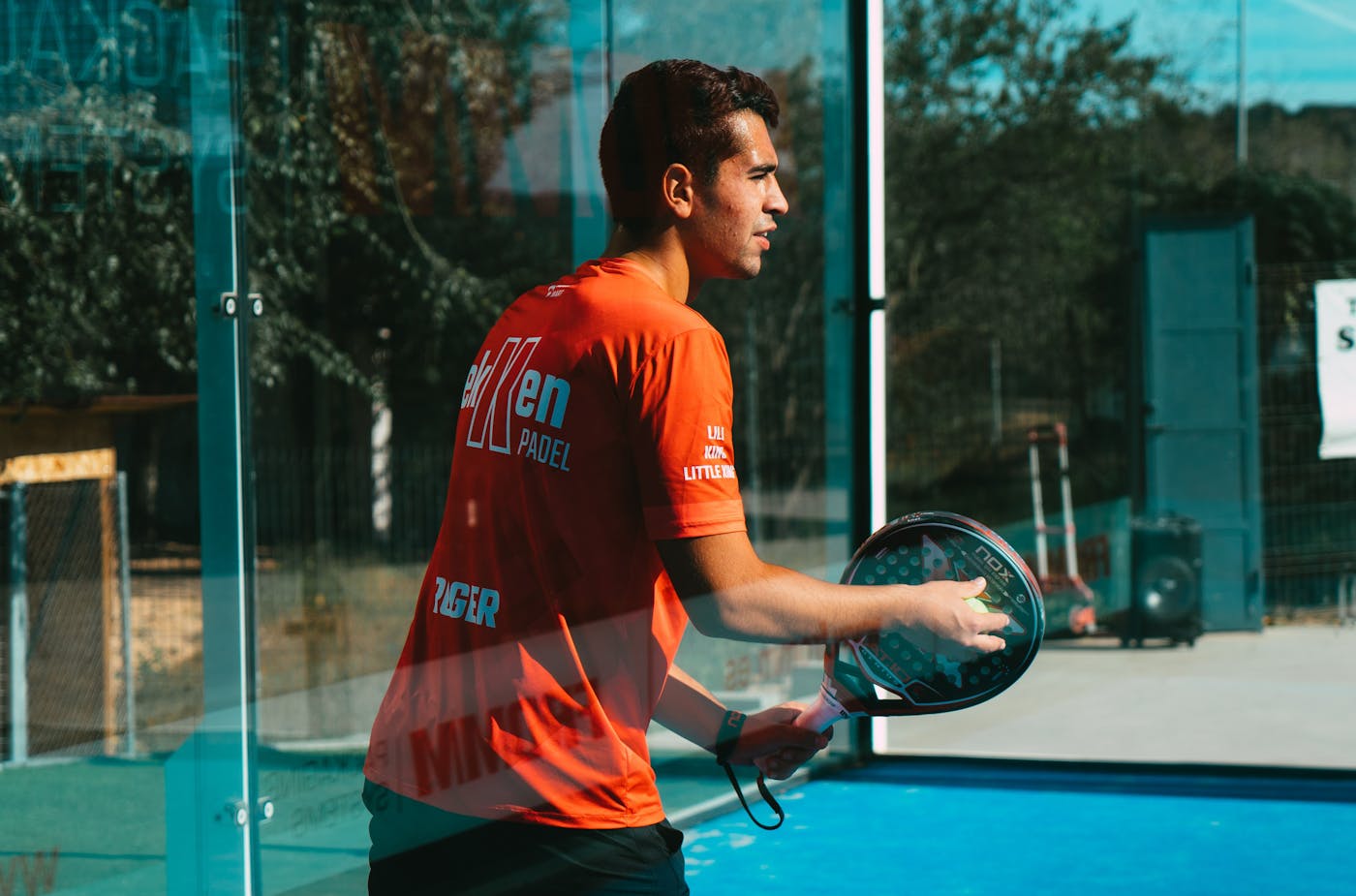
To coach a padel tactic with a conditioned game, keep a recognisable rally and change one rule or starting situation to make the decision appear more often. For a net transition, start the defending pair at the back and ask them to read the opponents’ response to a lob before deciding together whether to advance.
This illustrative session is for a coach and four adult players who can sustain a short rally. A lob is a high shot intended to travel over opponents; a net transition is movement from a deeper position towards the net. Adjust the timing, feeds and complexity to the people present. It is a proposed coaching plan, not a tested intervention.
An expert-validation study of tactical principles in padel discusses adapting practice tasks around tactical goals. Its expert consensus does not establish that the specific session below improves match outcomes. LTA Padel’s coaching resources can help coaches find formal learning and local guidance.
A 45-minute example session
| Time | Task | Coach observes |
|---|---|---|
| 0–8 min | Warm up with gentle movement and cooperative rallies, including a few comfortable lobs and overhead replies. | Can both pairs sustain the feed safely and see the ball? |
| 8–18 min | Start one pair behind their service line and the other nearer the net. Feed to the back pair; they play a lob. The net pair returns a controlled ball; the rally continues. Switch roles regularly. | Are both back players moving, holding or making different choices as opponents prepare? |
| 18–30 min | Repeat the same start, but let the front pair choose a controlled overhead or another reply. The back pair calls “go” or “hold” and plays the point. | Is the call early enough for both partners to prepare for the reply? |
| 30–40 min | Play normal points. Each pair notes one situation in which it chose to advance or hold after a lob. | Does the cue appear when the lob is not guaranteed? |
| 40–45 min | Ask each pair for one observation and one cue to test next time. | Can players describe what they saw, not just the result? |
These are suggested timings, not required quotas. An overhead is a shot played above the head. Keep feeds manageable and stop play if someone enters an unsafe position or the court is unsuitable.
How do you decide whether to simplify?
Watch several attempts before changing the task. If the front pair cannot return enough feeds for the decision to occur, slow the feed or make the reply cooperative again. If one player repeatedly cannot hear or use the call, pause and agree a shorter call, then resume at the same pace. If both pairs can recognise the situation, remove the fixed starting feed and let it arise in ordinary rallies.
Change one feature at a time: feed pace, opponent choice or starting position. That makes it easier to see whether players can now practise the decision. Avoid teaching “always follow a lob”: a short lob or an opponent ready to attack may leave the pair better prepared at the back. The deep-lob progression can support shot control when players struggle to create time.
What should the coach record?
For a small, illustrative sample, note the first six eligible lobs in the final game: timestamp or score, what the opponents did, whether both partners advanced or held, and whether the next reply was playable. Mark a blocked view or rally-ending error as unclear or not applicable. These notes describe a situation; they do not prove the movement caused the outcome. Do not compare the six rallies with a different opponent or feed as if they were a controlled test.
For a fuller method, use the net-transition video review. The mixed-ability coaching guide offers ways to adapt a shared task, and the partner debrief helps players agree on a cue without assigning blame.
Where can video help?
With permission from everyone recorded and subject to venue rules, use a wide clip showing the players and ball to review one decision. Padel Coach App can provide another perspective on a suitable clip; compare any feedback with the full rally and the coach’s judgement. The recording guide covers consent and camera placement.
Learn how our guides are researched, prepared and checked in our editorial policy.